
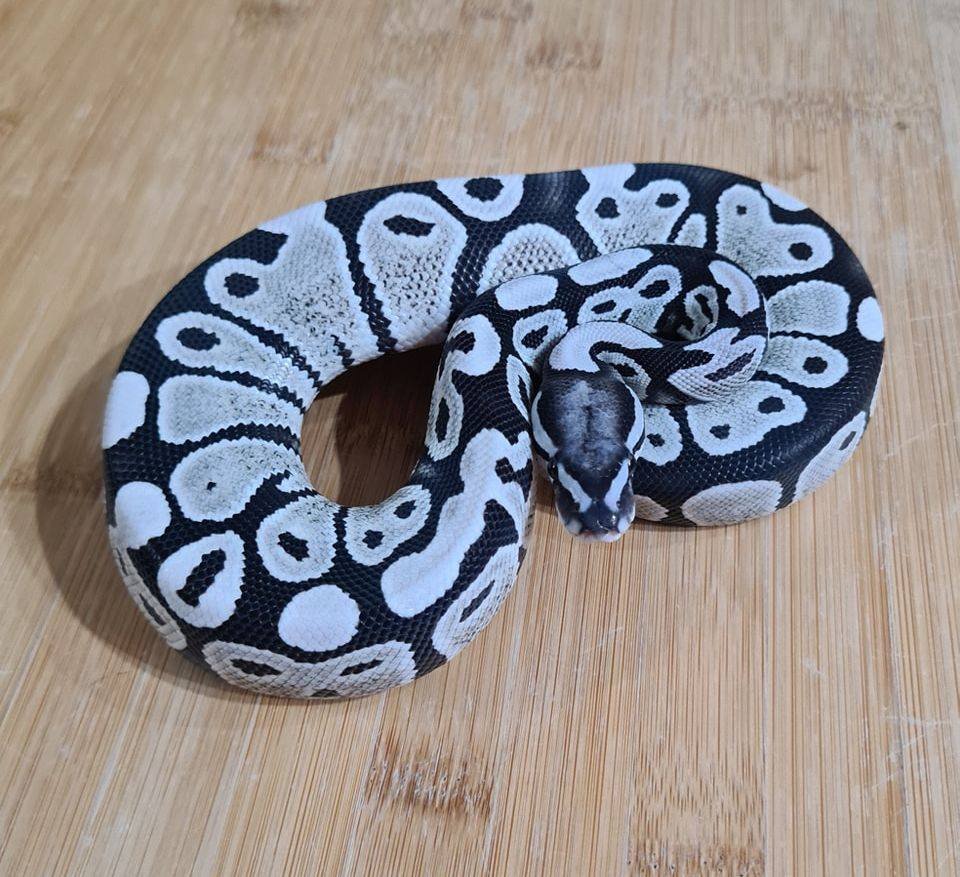
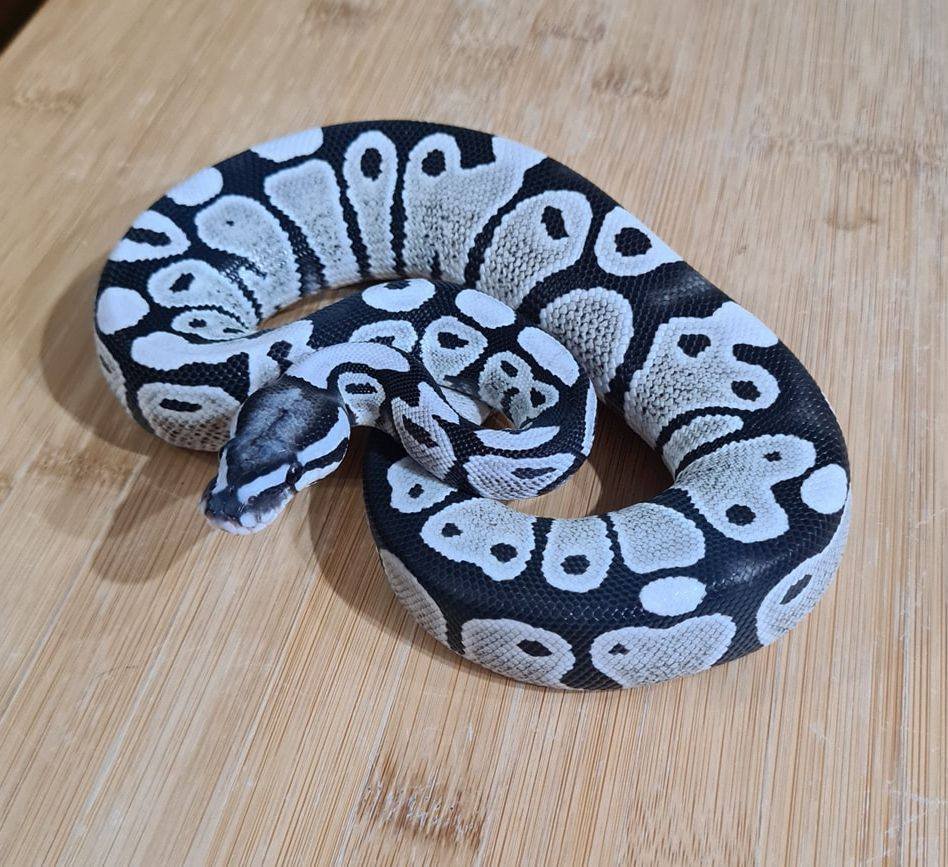
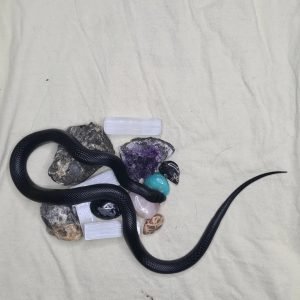
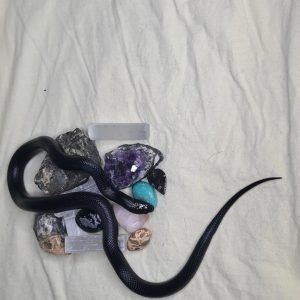
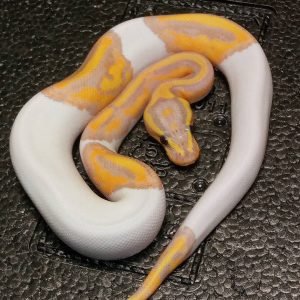
Bring home one of the most visually unique and sophisticated mutations in the reptile hobby with the Axanthic Ball Python (Python regius). Native to the grasslands and forests of West and Central Africa, ball pythons are globally celebrated for their gentle disposition and manageable size. This incredible Axanthic genetic morph completely alters the snake’s appearance by blocking the production of yellow, red, and orange carotenoid pigments. The result is a stunning, natural grayscale aesthetic featuring deep charcoals, brilliant silvers, and crisp white alien-head markings that give the snake a sleek, almost metallic look. Complemented by a famously docile, slow-moving personality and straightforward husbandry requirements, the Axanthic Ball Python offers an unbeatable combination of avant-garde modern beauty and a wonderful pet experience.
Key Features & Care Requirements
-
Stunning Monochromatic Grayscale Aesthetics: Features a true lack of yellow and red pigments, displaying a sophisticated palette of deep blacks, silvers, and crisp whites.
-
Legendary Docile Temperament: Inherits the famously calm, gentle, and slow-paced personality that makes ball pythons safe, confident, and exceptionally rewarding to handle.
-
Secure Terrestrial Enclosure: Requires a secure, escape-proof horizontal terrarium (minimum 40 gallons for a juvenile, upgrading to a 4x2x2 foot PVC enclosure for an adult) equipped with tight, secure hiding spots on both the warm and cool sides.
-
Warm Thermal Gradient & Moderate Humidity: Thrives with a warm basking spot (88°F to 92°F) and an ambient cool-side gradient of 78°F to 80°F, maintained via regulated under-tank heating or overhead radiant heat panels, alongside moderate humidity (55% to 60%, bumping to 70% during sheds).
-
Carnivorous Rodent Diet: A straightforward carnivorous diet consisting of appropriately sized frozen-thawed mice or rats fed once every 7 to 14 days depending on age.
Important Note: Axanthic ball pythons make phenomenal foundation animals for advanced breeding projects, especially when combined with other recessive or co-dominant genes like Pied or Pastel. With proper care and gentle, regular handling, they easily live 20 to 30 years as exceptionally calm and striking companions.

Reviews
There are no reviews yet.