
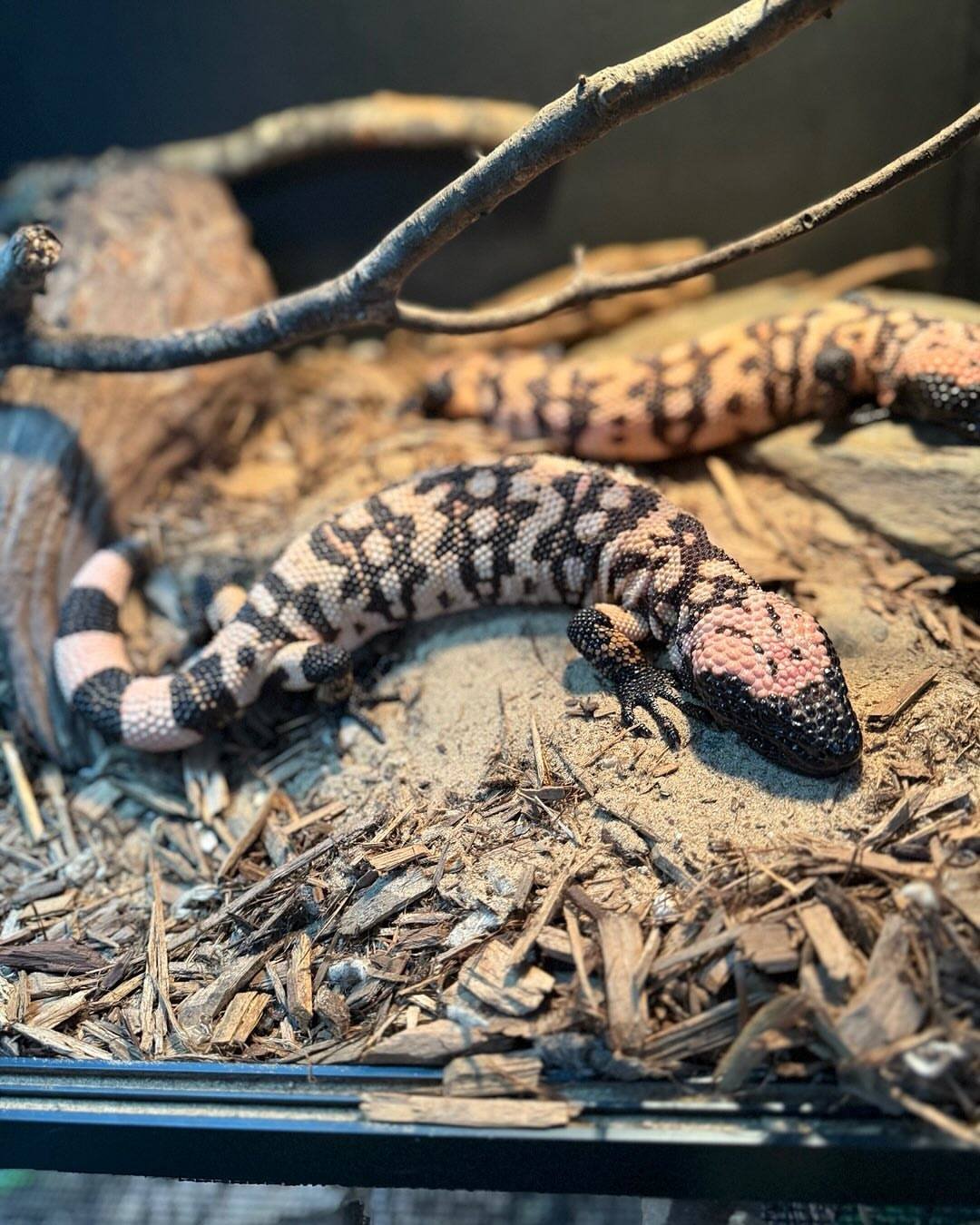
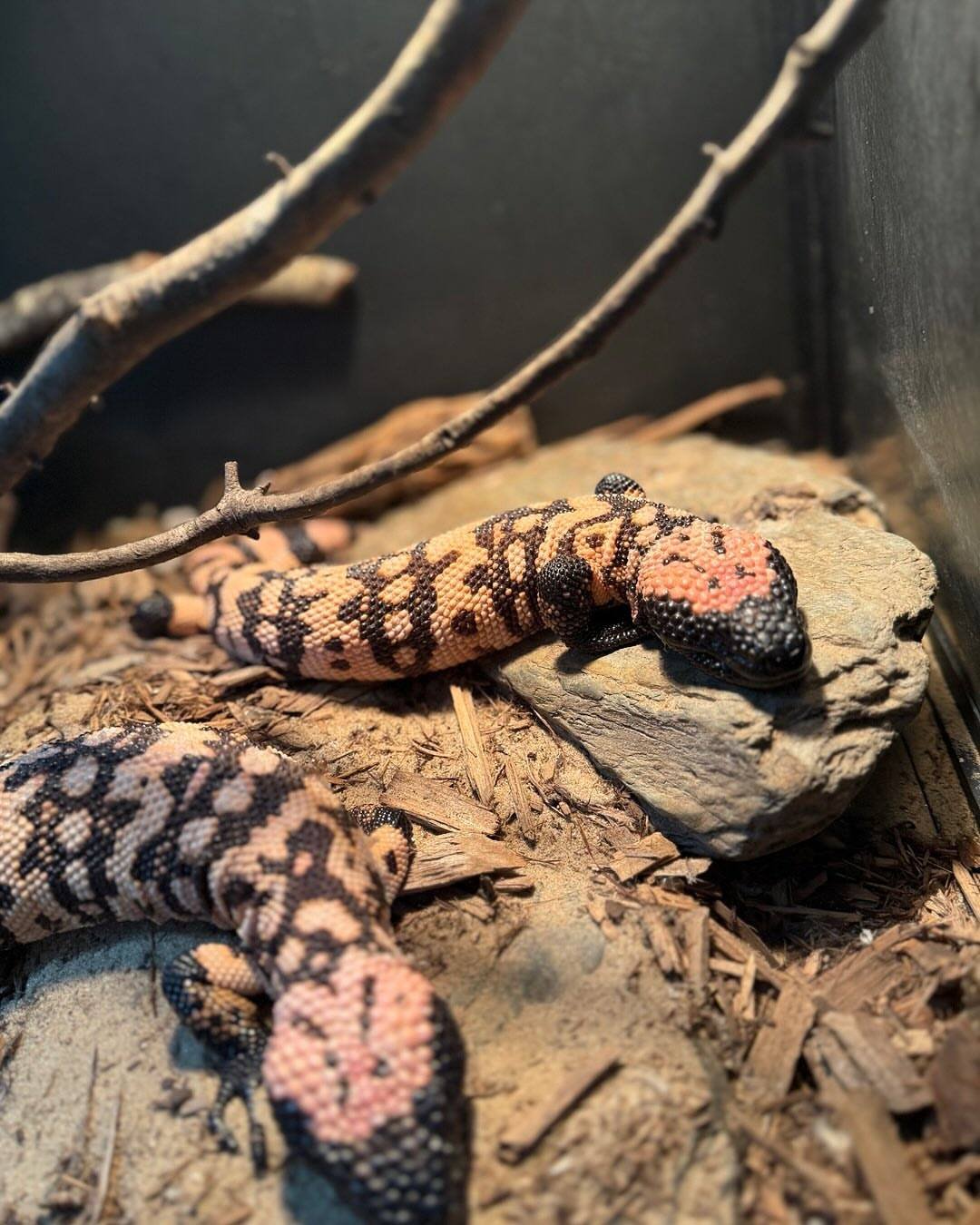
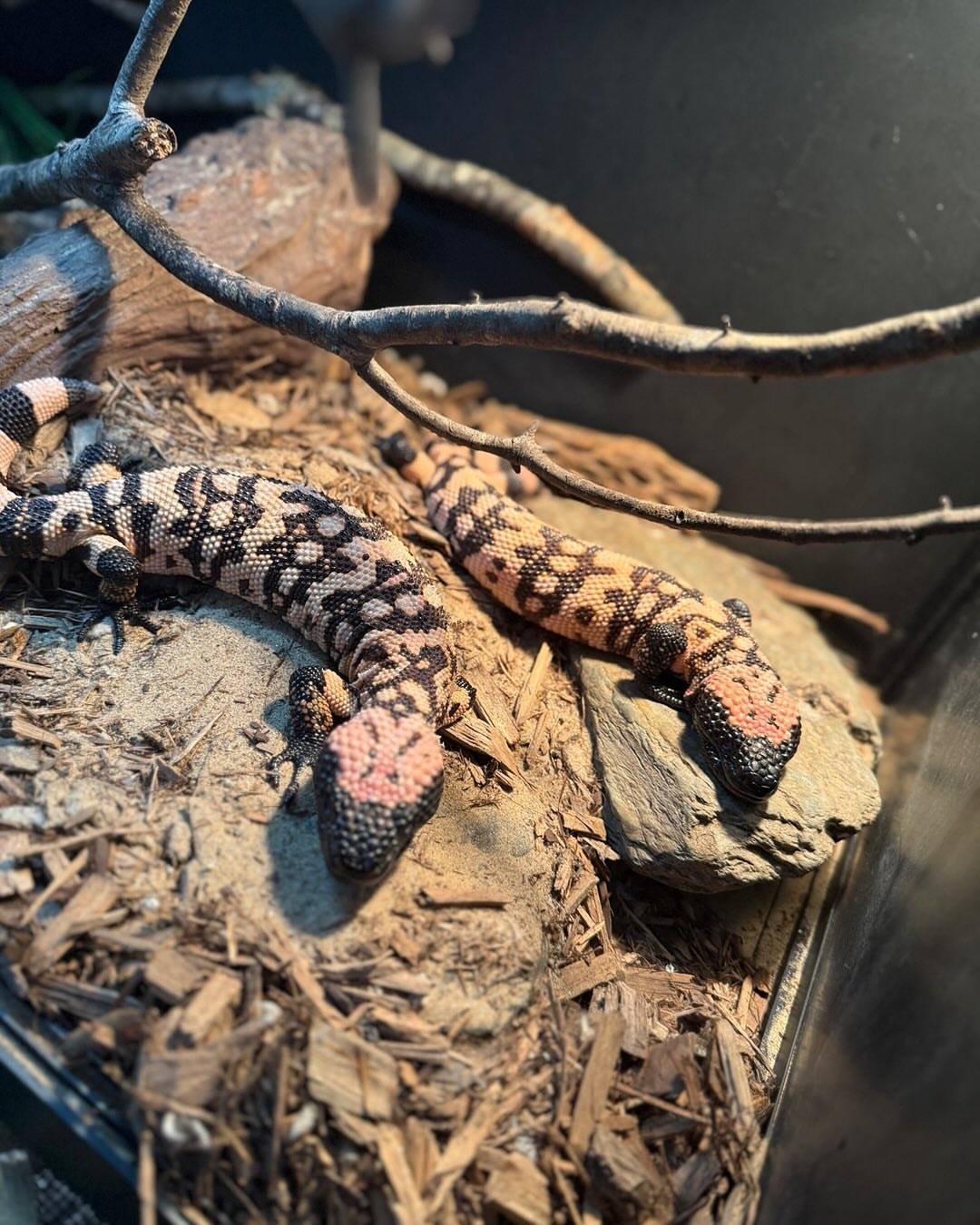
Bring home one of the most famous and fascinating reptiles on Earth with the Gila Monster (Heloderma suspectum). Native to the arid scrublands, deserts, and oak woodlands of the southwestern United States and northwestern Mexico, this stout-bodied lizard is instantly recognized by its bead-like, non-overlapping scales and vibrant warning coloration of pink, orange, or yellow blotches set against a dark black or brown background. As one of the only venomous lizards in the world, the Gila Monster commands profound respect; however, in captivity, they are surprisingly calm, deliberate movers with a fascinating, intelligent demeanor. Due to their strict legal protections and venomous nature, they represent the ultimate crown jewel for advanced, permitted herpetoculturists.
Key Features & Care Requirements
-
Iconic Aesthetics: Heavy, robust body covered in bead-like (granular) scales featuring high-contrast patterns of pink, orange, or yellow over a dark background.
-
Venomous & Regulated: Possesses specialized neurotoxic venom delivered via grooved teeth in the lower jaw; subject to strict state, local, and international permits and licensing requirements.
-
Secure Arid Setup: Requires a heavily secured, escape-proof horizontal enclosure (minimum 4x2x2 feet for an adult) with specialized locking mechanisms, smooth walls, and a deep, dry substrate like sand or aspen shavings for burrowing.
-
Climate & Heat Control: Thrives in a warm desert environment with ambient temperatures ranging from 75°F to 85°F and a dedicated basking spot reaching 95°F to 100°F, paired with low humidity and a heavy water bowl.
-
Carnivorous Diet: In captivity, they thrive on a specialized diet consisting primarily of pre-killed mice, rats, and occasional whole-prey items, fed on an infrequent adult schedule (every 1 to 2 weeks).
Important Note: Strictly for Advanced Keepers Only. Gila Monsters are venomous animals whose bite can cause severe pain, swelling, low blood pressure, and other medical complications in humans. Venom is delivered by chewing rather than striking, requiring extreme caution, specialized handling tools (such as snake hooks or tongs), and strict adherence to local wildlife laws before acquisition.


Reviews
There are no reviews yet.