
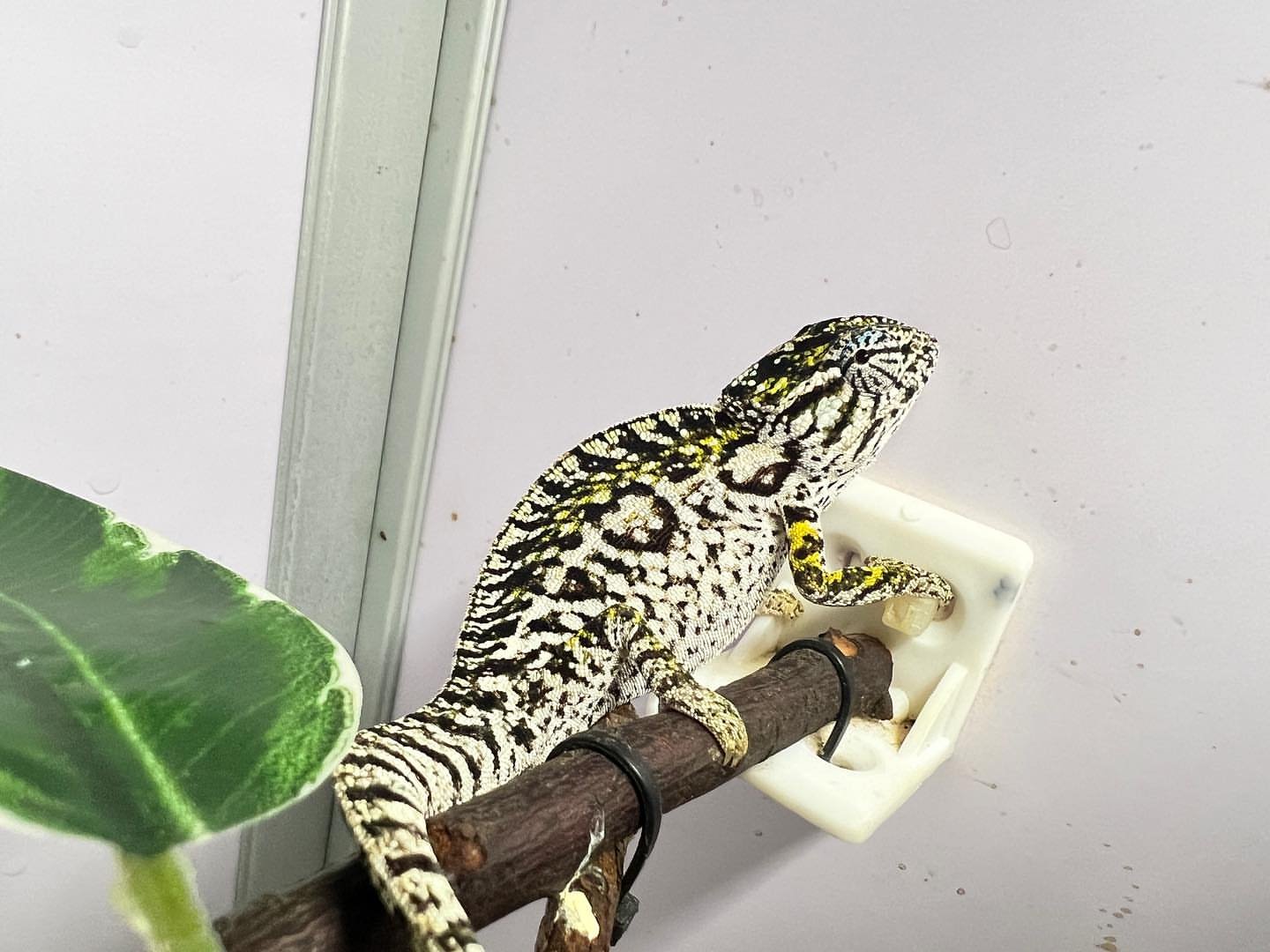
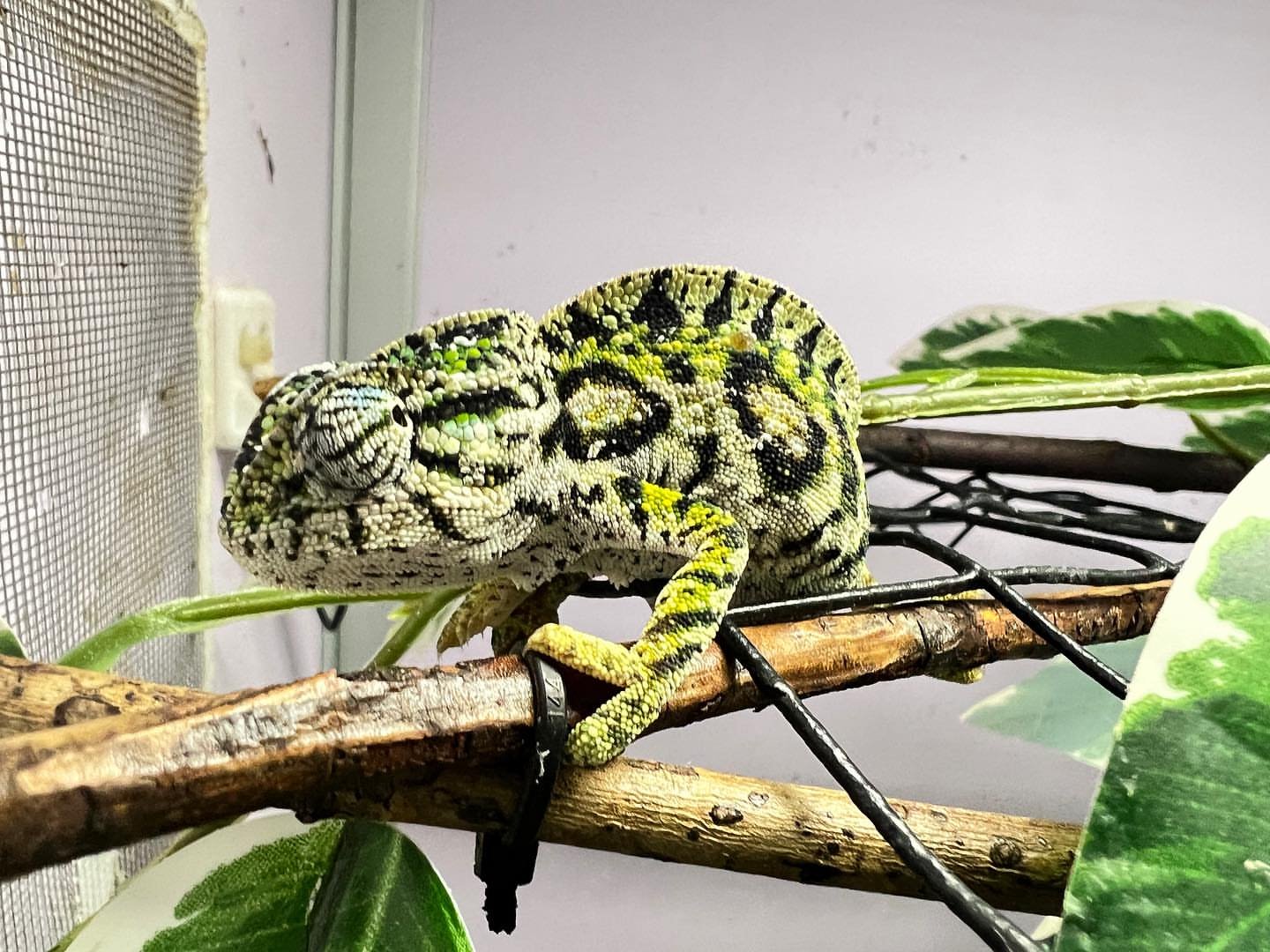
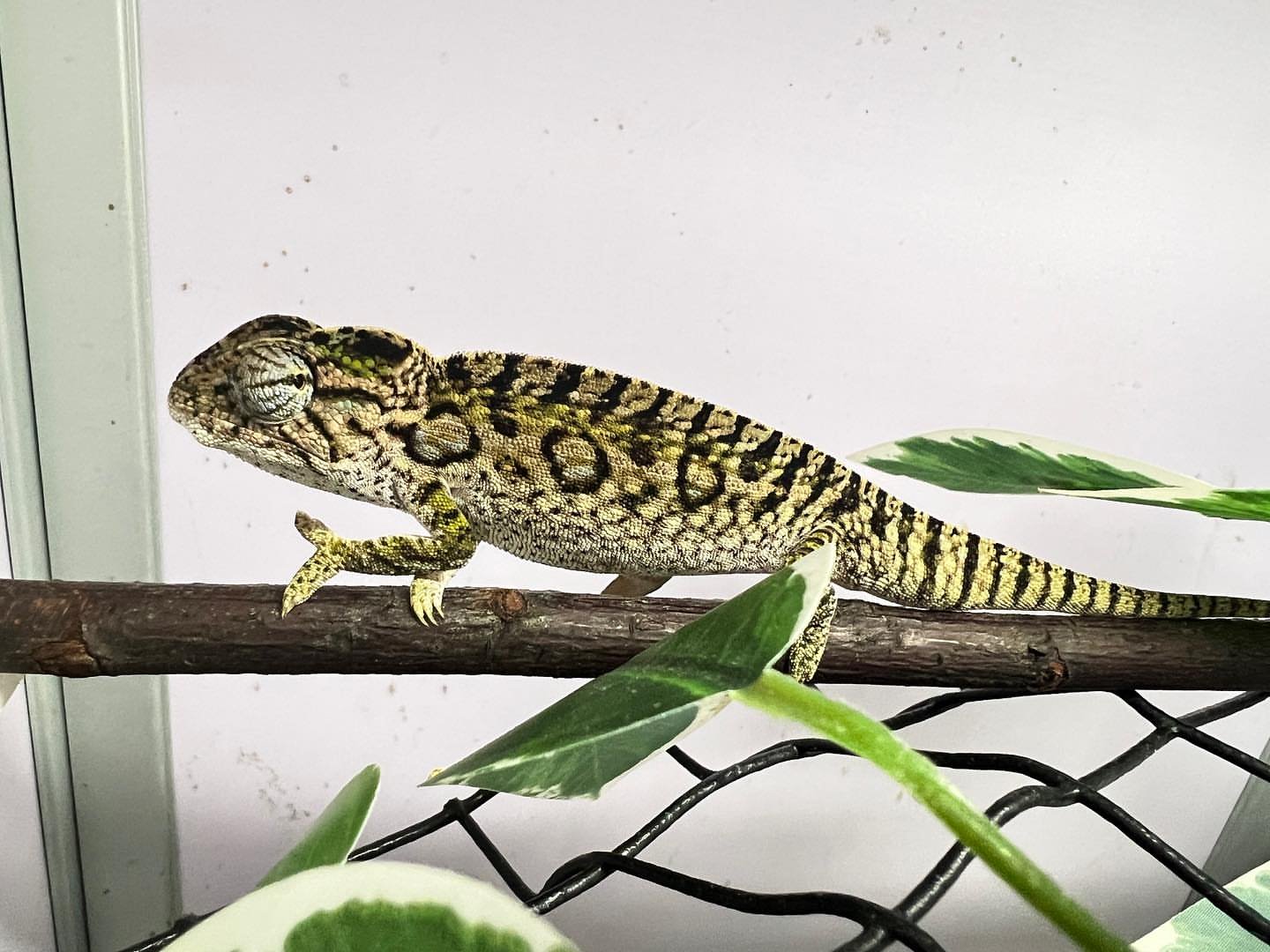
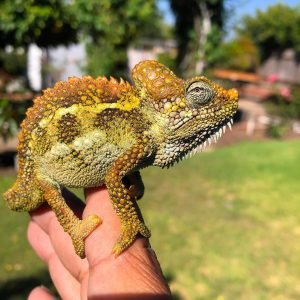
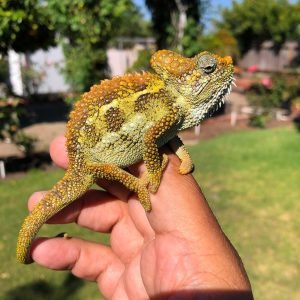
Bring home a living work of art with the Carpet Chameleon (Furcifer lateralis). Native to the scrub forests, plateaus, and coastal regions of Madagascar, Carpet Chameleons are smaller than their Nosy Be or Panther cousins—typically reaching a modest 8 to 10 inches in total length—yet they pack an extraordinary punch of color. Named for the intricate, carpet-like patterns running along their flanks, these remarkable lizards can rapidly shift between electric greens, deep yellows, vibrant reds, and stark black accents. Featuring independent turret eyes, zygodactylous gripping feet, and a lightning-fast projectile tongue, the Carpet Chameleon offers an engaging, mesmerizing display experience for enthusiasts who appreciate exquisite natural beauty in a more compact package.
Key Features & Care Requirements
-
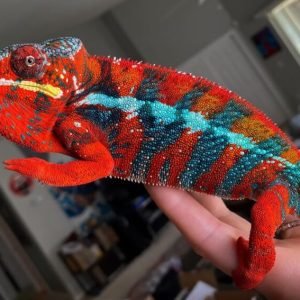
Intricate Pattern & Color-Shifting: Stunning lateral stripes and complex geometric patterns that transition through brilliant shades of green, yellow, red, and turquoise depending on mood and temperature.
-
Manageable Dwarf Size: Growing to a modest length of 8 to 10 inches, making them much easier to house in vertical setups than larger chameleon species.
-
Planted Screen Enclosure: Requires a well-ventilated vertical screen terrarium (minimum 18x18x36 inches for an adult) densely planted with live tropical foliage, vines, and horizontal branches.
-
Precision Lighting & Heat: Essential requirement for low-to-moderate output linear UVB lighting (such as a T5 HO 5.0 bulb) and a gentle basking spot reaching 82°F to 85°F, with ambient temperatures kept in the mid-to-high 70s.
-
Specialized Hydration & Insect Diet: Demands high ambient humidity (50% to 70%) provided by an automated misting system or drip system (as they require moving water droplets to drink), paired with a steady diet of small gut-loaded crickets, roaches, and silkworms dusted with calcium.
Important Note: Carpet Chameleons are solitary, highly territorial animals that must always be housed individually. Due to their delicate nature and preference for a peaceful, low-stress environment, they are best enjoyed as breathtaking display animals rather than handling pets.




Reviews
There are no reviews yet.